


| NATURAL SUPPLEMENT FOR GLUCOSE CONTROL |
What is Diabetes?
Diabetes mellitus can be defined as a group of metabolic diseases characterized by chronic
hyperglycemia resulting from defects in insulin secretion, insulin action or both, resulting in
impaired function of carbohydrate, lipid and protein metabolism. As a result of this, the glucose in
the blood cannot be absorbed into the cells of the body.
Two types of diabetes have been recognized:
Type 1
This type of diabetes develops when the body’s immune system destroys pancreatic beta-cells, the
cells responsible for making the hormone insulin that regulates blood glucose. The result is a
pancreas that produces little or no insulin. The mechanism of attack on the beta-cells is unknown
but genetic, autoimmune, environmental and viral factors have been implicated.
The classical symptoms include thirst, polyuria, wasting / or keto-acidosis. This form of diabetes
has been reported among children and young adults. They need several injections of insulin a day
or an insulin pump to survive. This condition has been reported in 5-10% of all diagnosed diabetic
cases.
Type 2
Type 2 diabetes can further be divided into non-obese, obese and maturity-onset diabetes of the
young. This accounts for 90-95% of all diabetic cases. This is the most common form of diabetes.
Patients with Type 2 have two defects:
a. Abnormal insulin secretion [leading to insufficient insulin]
b. Resistance to insulin action in target tissues [inability to utilize the insulin that is produced]
In insulin deficient diabetes, the secretion of the hormone is either totally defective or severely
impaired. The failure of the pancreatic beta-cells to secrete insulin probably involves genetic, viral
and auto-immune processes among others. Viral infections are capable of damaging the pancreas.
To become diabetic, an individual must not only be affected by viruses but must also develop
antibodies to islets cells.
Type-2 diabetes is associated with obesity, older age (> 40 years), family history, physical
inactivity, impaired glucose tolerance, prior history of gestational diabetes and certain races. It may
present with classical symptoms but often is asymptomatic. Despite the presence of hyperglycemia,
the concentration of ketone bodies in the blood and urine are low. Today this condition is
increasingly being reported among children and adolescents.
Gestational diabetes
This condition has been reported among pregnant women and treated with insulin. It can have
deleterious consequences for both the mother and the fetus. This condition is temporary and
disappears after birth. However, women with this form of diabetes have a higher incidence of
developing Type 2 diabetes later.
Insulin resistance
Every cell in our body requires energy in order to function. The body’s primary energy is derived
when our body breaks down carbohydrates into glucose in the blood stream. The more
carbohydrates are consumed, the higher the blood glucose levels. The glucose from the digested
food circulates in the blood as a ready source of energy. The beta-cells of the pancreas produce a
hormone called insulin whose function is to push the blood glucose into the various cells of the
body.
On each cell surface are insulin receptors whose function is to regulate the inflow of glucose to
provide the cells with energy. The insulin binds to the receptor site on the outside of cells and acts
as a key to open into the cell through which glucose can enter. In a healthy individual, the
pancreatic beta-cells produce exact amount of insulin needed to match the amount of food
ingested. The controlled system of the body maintains and regulates the blood glucose. Blood
glucose has to remain within normal limits i.e. between 70 to 120 mg / dl (milligrams per deciliter)
after a heavy meal. In diabetes mellitus, this metabolic process is altered.
Due to factors identified (that includes life-style changes and high carbohydrate diet) and with so
much insulin, these receptors begin to malfunction. Blood glucose builds up in the blood stream
and the cells starve. With defects on the receptors, the body needs to produce more insulin to push
the glucose into the cells. This process continues and eventually type 2 diabetes sets in. Once the
blood glucose reaches a certain level, unused glucose naturally spills into the urine as the body’s
natural response is to get rid of excess glucose. This results in frequent urination (polyuria) and
unquenchable thirst (polydipsia) because of the continued removal of fluids to transport the extra
glucose into the urinary bladder. The body then is forced to turn to other sources of energy in the
body (polyphagia). It breaks down the stored fats for its glucose. A by-product of this is the ketone-
bodies which builds up in the blood and may result in dangerous events. Keto-acidosis has been
reported in 10% of diabetic deaths.
Long term complications of this disease affecting the vasculature, eyes, kidneys, nervous system
and the probable development of drug dependency in a large number of patients are the two major
sets of problems that are confronted all around the world.
The classical triad of diabetes is:
Polydipsia - The increased level of glucose in the blood leads to hyper-osmolarity and depletion of
intra-cellular water. This triggers thirst centers in the brain leading to thirst.
Polyphagia - Insulin deficiency leads to catabolism of proteins and fat leading to a negative energy
balance and increased appetite.
Polyuria - Increased blood glucose spills over into the kidney as well as promoting an osmotic
diuresis leading to increased urination.
Consequences of high insulin elevation and insulin resistance
Weight gain
Fat accumulation and storage leading to obesity
Heart diseases
Hardening of the arteries
Increased blood cholesterol and triglyceride levels
Kidney diseases
Mineral and vitamin deficiencies
Warning signs and symptoms
Frequent thirst
Frequent urination and urine is foamy
Unexplained weight loss
Increased hunger
Lethargy and tiredness
Weakness
Frequent or recurring skin infections
Extreme fatigue
Wounds that don’t heal
COGENT db+
Formulation
A medicinal formula in Ayurveda is always considered as being more than merely the sum of its
parts. It is the overall balance or action of the formula that is important. This is based on the
Ayurvedic philosophy that emphasizes the whole. The extracts of the herbs or parts are combined
in such a way that their natural attributes synergistically enhance the action of the whole formula.
Thus, an holistic approach to the treatment of a disease syndrome.
One such supplement that was formulated years ago and based on Ayurvedic principles is Cogent
db+. The ingredients in the formulation have had conventional therapeutic and recorded use in
Ayurvedic medicine for disorders of the kidney, cardiovascular system, liver and metabolism for
thousand of years. The formulation has 2 distinctive properties:
1. Glucose lowering, and
2. Acts as a prophylactic against diabetic complications.
Thus, this herbal supplement
1. Helps keep blood glucose levels in check;
2. Does not compromise vital organs such as kidneys and liver; and
Based on evidences from the Ayurvedic literature, the supplement now has undergone extensive
scientific and clinical evaluation for over 20 years in various medical institutions in Asia.
9 Herbs:The Synergy of Healing
Azadirachta indica (Margosa or Neem)
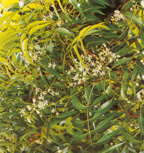
Available throughout India in deciduous forests and is also widely cultivated. It is a medium large
sized tree 10-15 m in height with a clear bole of grayish to dark tuberculated bark; compound
leaves, imparipinnate leaflets, sub-opposite, serrate and very obliques at base; flowers, cream or
yellowish-white in auxillary panicles, staminal tubes, conspicuous, cylindrical, widening above,
lobed at the apex. Fruits are one seeded drupes with woody endocarp, cotyledons thick, fleshy and
oily. It is hardy, quick growing, ever green showy tree.
Clinical uses
The herb has anti-septic, anti-inflammatory, anti-bacterial and anti-hyperglycemic (blood glucose
lowering) properties. It is used in healing chronic wounds, diabetic foot and gangrene developing
conditions. The hepato-renal protective activity and hypo-lipidemic effect has been recently
published. It is a blood purifying agent and a prophylactic in micro-angiopathy.
Phyllanthus emblica (Indian gooseberry)
It is found growing throughout India in the deciduous forests and on hill slopes and cultivated in
the plains. This is a small to medium sized deciduous tree, 8-18 m in height with thin light grey
bark exfoliating in small thin irregular flakes. The leaves are simple, very many sub-sessile, closely
set along the branchlets, districhous, light green having the appearance of pinnate leaves. The
flowers are greenish yellow in axillary fascicles, unisexual, males numerous on short tender
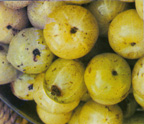
pedicles, females few, sub-sessile, ovary three celled. The fruits are globose, fleshy, plae-yellow
with six obscure vertical furrows, enclosing 6 trigonous seeds in 2 seeded, 3 crustaceous cocci. The
small leaves are set in pinnate fashion, very closely. Fruits are 1.5-2.5 cm in diameter.
Clinical uses
Besides being a rich source of vitamin C, the herb is considered one of the best cardiac, neuro-
hormonal and liver-tonic [hepato-protective]. It has been scientifically proven that it modifies
hepato-toxic and reno-toxic effects. In Ayurveda, based on its anti-bacterial and anti-inflammatory
activity it has been accredited as a prophylactic medicine for preventing ophthalmic problems (that
includes retinopathy) and different diabetic conditions. It also has anti-ageing and rejuvenation
properties. The herb has gained scientific acceptance that it supports the blood vessels, nerves at
the cellular levels for improving the immunologic barrier as well as smooth maintenance of
circulation and conduction of impulses.
Curcuma longa (Turmeric)
It is available throughout India and cultivated. It is a perennial herb, 60-90 cm in height with a
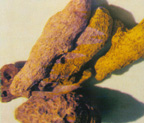
short stem and tufts of erect leaves. The rhizome is cyclindrical, ovoid, orange-colored and
branched. The leaves are very large, petioles as long as the blade, oblong, lanceolate, tapering to
the base up to 45 cm long. The flowers are pale yellow in spikes concealed by the sheathing
petioles. The flowering bracts are pale green. It is a fleshy rooted herbaceous plant.
Clinical uses
It has antiseptic, anti-bacterial activity and anti-inflammatory properties. It is well-known as a
powerful blood purifier. Helps in healing chronic wounds quickly particularly corneal wound
healing. Recent research shows that it has atherogenesis prevention property [anti-atherosclerotic
effect], is a good antioxidant, possesses immuno-modulatory and cytotoxic, activity, inhibits
aggregation and alters eicosanoid metabolism in human blood platelets and also has hypolipidemic
action. It is vascular supportive and useful in conditions where gangrene development is a
possibility as in diabetic foot. Has a protective effect on liver damage. It has been prescribed since
time immemorial in Ayurvedic medicine for controlling diabetic complications, Experimental
evidence in rats show that it inhibits LDL oxidation and has hypocholesterolemic effect.
Trigonella foenum-graceum (Fenugreek)
It grows wildly in Kashmir, Punjab and upper Gangetic plains. It is also cultivated in many other
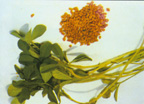
parts of India as a pot-herb. It is an aromatic, erect, annual plant 30-60 cm in height. The leaves
are pinnate, 3-6 folister while the leaflets are toothed. The flowers are white or yellowish white.
The fruit pods are 5-7.5 cm long with long persistent beak, 10-20 per pod, greenish-brown along
with a deep groove across one corner.
Clinical uses
Trigonella has been known in Ayurveda to be the best known anti-hyperglycemic herb and has
been in use for more than 2000 years. It has been recently proven that this herb possesses anti-
hyperglycemic property. It is also a powerful anti-inflammatory herb with anti-bacterial activity. It
is good in toxic conditions and disorders of the liver. It prevents tissue resistance and enhances
intra-extra cellular transportation.
Rotula aquatica (Country borage)
It is available throughout India especially in the sandy and rocky beds of streams. It is a small
shrub, much branched, 60-180 cm in height having numerous lateral, short and arrested branchlets,
which often root. The leaves are simple, nearly rounded at the apex, more or less hairy, sessile and
spatulate, crowded at the branches. The flowers are pink, having short pedicellate, single or couple
together on short branches which s lateral. The fruits are sub-globose, orange and drupes which is
tipped with the remains of the style.
Clinical uses
Diabetic nephropathy is one of the commonest complications of tissue damage caused by diabetes.
This herb is specially used for treating renal pathology such as diabetic nephropathy. The herb is
also a powerful laxative and diuretic.
Syzygium cumini (black plum)
It is available throughout India. It is mostly seen in forests up to 1800 meters, usually on river
banks and moist areas and also cultivated as shade trees. It is a medium to large sized tree, 20-30
cm in height, having smooth light grey bark with dark patches, simple leaves, opposite, variable in
shape, 3cm broad, 10-15 cm long. The flowers are greenish-white or dull white, while the fruits are
oblong or ovoid-oblong, dark purple with pinkish juicy pulp and one seeded. These seeds are round
and strong. This is a tall and evergreen tree. The leaves are smooth, shining and long.
Clinical uses
It is a powerful anti-inflammatory herb and good in toxic conditions and disorders especially
affecting the liver. It has been used as an anti-microbial prophylactic in alleviating infections
associated with chronic diabetes. It also exhibits hypolipidemic effect. It diminishes tissue
resistance and improves intra-extra-cellular transportation.
Terminalia bellerica (Belleric myrobalan)
This is a genus of 250 species from tropical regions of which 12 are native in India. It is seen
throughout India in deciduous forests up to an elevation of 900 meters. These are large trees.. It is
a large buttressed, deciduous tree with thick, brownish grey-bark having shallow longitudinal
fissures, simple leaves, alternate, long petioles, crowded at the extremities of the branches, broadly
elliptic, margins entire, prominent mid-rib on both surfaces. Leaves are alternate or sub-opposite,
often with glands on the petiole or on the lower part of the midrib beneath. The flowers are in
axillary spikes, longer than petioles. The fruits are ovoid, grey drupes, obscurely s-angled, narrowed
into a very short stalk. Plants are propagated by seeds.
Clinical uses
This herb provides symptomatic relief of polydipsia and works as a prophylactic in diabetic
retinopathy. It also arrests general debility. It possesses rejuvenating property particularly in
arresting necrosis.
Terminalia chebula (Chebula myrobalan)
It is available throughout India in deciduous forests on dry slopes up to 900 meters. It is a
moderate to a large sized tree, deciduous, rounded crown and spreading branches with ovate
leaves. The flowers are elliptic or obovate and yellowish found in terminal spikes or short panicles.
The fruits are glabrous, shining, ellipsoidal, the drupes are ovoid or obovoid, yellow to orange-
brown in color, faintly angled, up to 4 cm long. The seeds are hard and yellow while the leaves are
covered with hairs. The fruit have specific segments.
Clinical uses
It is a prophylactic for diabetic neuropathy and retinopathy. It is an effective antidote for internal
inflammatory conditions such as pancreatitis. It is considered rejuvenative and also reverses
necrosis. Recent evidence shows that it has anti-oxidant, anti-bacterial, hypolipidemic and cardio-
tonic activity. It has been demonstrated that it has anti-mutagenic activity in Salmonella
typhimurium and reduces cholesterol induced atherosclerosis in rabbits.
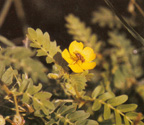
Tribulus terrestris (land caltrop)
It is a trailing and spreading herb, densely covered with minute hair, compound leaves, in opposite
pairs, 3-6 leaflets up to 8 cm long, usually silky flower, white or yellow, solitary, arising from the
axils of leaves. The ovary is bristle, style short and stout. The fruits are globose, spinous or
tuberculate and often cling to the bodies of animals. The trailing plant is common in sandy soil.
The carpels of the fruits resemble a cloven hoof of the cow. It is an annual or perennial prostrate
herb with many slender spreading branches.
Clinical uses
It is a powerful diuretic, tonic and aphrodisiac. It reduces inflammations, edema, urinary
complaints, impotence and painful micturition. It serves as a prophylactic for diabetic nephropathy
and is supplementary in healing diabetes induced impotence.
Cogent db+ is
- A natural product of herbal origin
- Safe, efficacious and with no side effects
MANAGEMENT OF BLOOD GLUCOSE USING COGENT db+
- Visit your personal Physician to determine whether you are diabetic·
- If you are already a confirmed diabetic check your glycosylated or glycated hemoglobin and
blood glucose levels (base-line data) - Take 2 tablets of Cogent db+ after breakfast and 2 tablets of Cogent db+ after dinner (for
those who are on oral diabetic tablets or even insulin –they need to be taken half an hour
before meals) - Exercise and diet are very important – approach your dietician for a diet for you and
recommended exercise by your Physician - Check your glycosylated hemoglobin at the end of three months
- Your physician will guide you through a good control of your condition.

COGENT db+
 |
 |
 |
 |
SindorHealthcare
Passion-Driven Life Solutions
Passion-Driven Life Solutions
| Copyright 2005-2009 Sindor Healthcare Pte Ltd., All Rights Reserved |